
The success of any contracting project — whether a residential building, a commercial facility, or an industrial site — doesn't depend only on the quality of execution on site; it starts with proper planning before the first block is laid. The more that material supply conditions and transport distances differ from the norm, the more important precise planning for every phase becomes, to ensure the project is delivered on time and to the required quality.
In this guide we walk through the five stages the ABT Contracting (Aamar Al-Bayan Al-Thabit for Contracting) team follows in executing general contracting, concrete, and electromechanical projects across different regions of the Kingdom.
Step One: Scope and Technical Requirements Study
Before any execution step, work begins with a comprehensive review of the project's requirements: the approved drawings, the purpose of the facility (residential, commercial, industrial), and the required technical specifications. This stage also identifies the owner's priorities and how flexible the schedule is, which helps set a realistic execution plan instead of a theoretical one that may run into obstacles later.
This assessment typically includes studying the nature of the geographic location and its proximity to supply sources, since that directly affects the timeline and cost.
Step Two: Planning and Mobilization
This stage is the backbone of any successful project, and includes:
- Execution schedule: dividing the project into clear phases with a defined duration for each.
- Supply and resources: securing materials and equipment in advance, especially items that take longer to reach from factories or suppliers in other cities.
- Safety and quality plan: setting clear standards for every work item before starting, not during.
- Mobilizing technical crews: ensuring trained labor and qualified supervisors are available on site.
Good planning at this stage reduces unexpected stoppages, which are the biggest driver of higher costs and delivery delays.
Step Three: Field Execution
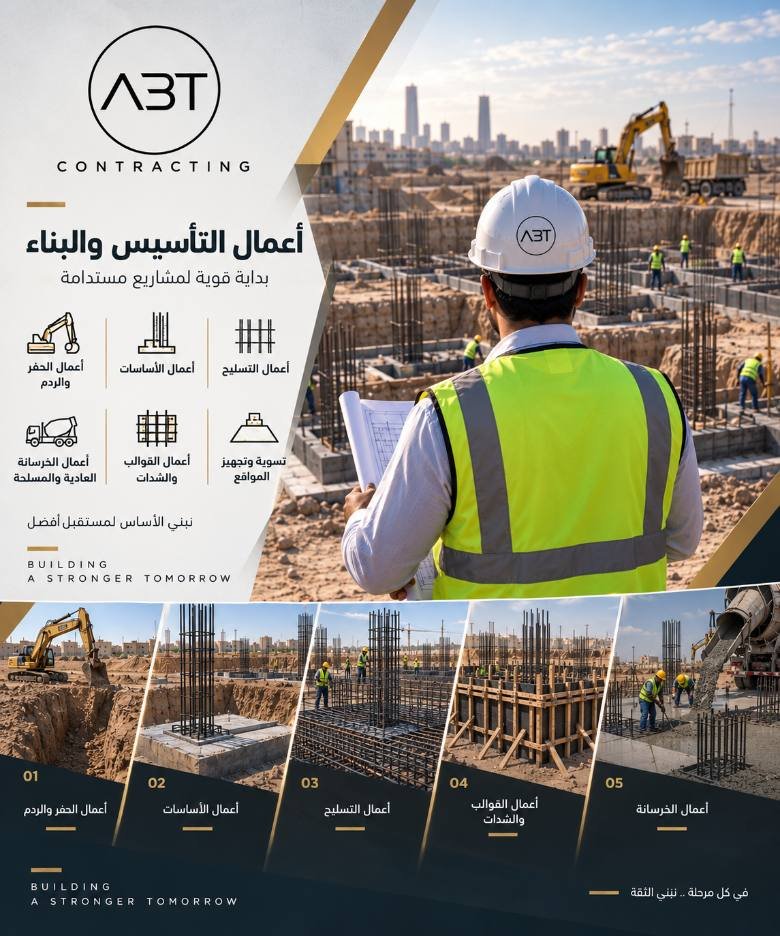
Once mobilization is complete, actual work begins on site: concrete works (foundations, columns, slabs), electromechanical works, finishing, and infrastructure works depending on the nature of the project. At this stage, coordinating between the different disciplines (structural, electrical, mechanical) is the decisive factor in avoiding conflicts between trades and ensuring steady progress.
Daily field follow-up and documenting progress as it happens let the project owner know the status of their project at any moment, without surprises at handover.
Step Four: Inspection and Testing
Before moving to any new phase, the completed works are checked against the approved specifications. This stage includes testing the electromechanical systems, inspecting the structural works, and closing out any observations before they build up into bigger problems in later phases. This step is often cut short on projects run by non-specialized contractors, which later leads to higher maintenance costs after handover.
Step Five: Commissioning and Handover
The final stage includes trial operation of the systems, handing over the project with clear technical files (as-built drawings, test certificates, maintenance manuals), and post-handover support for any observations that arise during the warranty period. An organized handover reflects the contractor's professionalism and protects the project owner from any later confusion about what was actually executed.
How to Choose a Trustworthy Contractor for Your Project?
When choosing a general contractor, it helps to make sure of the following:
- A real track record and clients who can be contacted for reference.
- The ability to handle more than one discipline (structural, electromechanical, finishing) under a single team instead of multiple subcontractors.
- A clear execution methodology for every phase, not just general promises.
- The ability to maintain a permanent field presence at the project site without delays due to distance.
Conclusion
Executing a successful contracting project depends on a clear methodology that starts with a careful study of requirements, good planning for resources and supply, organized field execution, and rigorous inspection before handover. The ABT Contracting team follows this approach across all its projects, under a single management covering civil, electromechanical, and finishing works.